Uncategorized
Polkadot Mushroom Chocolate Bar Ingredients: A 2026 Transparency Report
Apr
The Polkadot brand has become synonymous with the “magic mushroom” chocolate aesthetic, but in 2026, the market is split between high-quality functional supplements and unregulated “smoke shop” versions. For the discerning consumer, knowing what is inside the wrapper isn’t just about the experience—it’s about safety, legality, and health.
Key Takeaways
- Two Distinct Versions: “Authentic” functional bars use legal, non-psychoactive mushrooms like Lion’s Mane and Reishi; however, many street-level bars contain unregulated synthetic tryptamines.
- The Base Matter: Most bars use a high-quality Belgian Milk Chocolate or dark chocolate base to mask the earthy flavor of mushroom extracts.
- Adulteration Risks: Recent 2026 lab reports have found “Polkadot” labeled bars containing 4-AcO-DMT or Amanita Muscaria instead of the psilocybin or functional blends advertised.
- Scannable Verification: Genuine 2026 products often feature QR codes linked to third-party lab results (COAs).
1. The Functional Mushroom Foundation
In a legitimate “Mushroom Magic Blend,” the goal is nootropics, not hallucinations. These bars are designed for professionals who want the “Polkadot” lifestyle without the legal or psychological risks of psilocybin.
Adaptogens and Nootropics
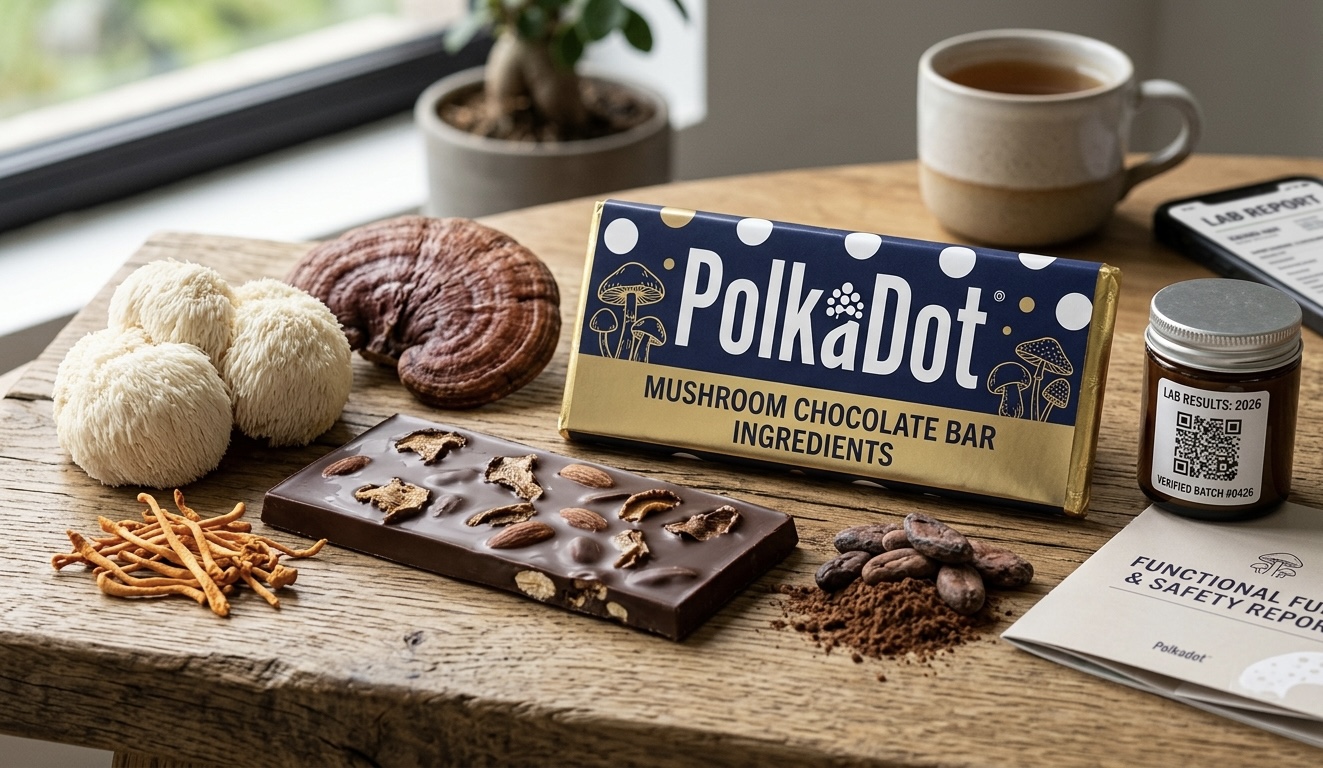
Most high-end functional bars feature a “Proprietary Polkadot Blend” consisting of:
- Lion’s Mane: For nerve growth factor (NGF) and cognitive clarity.
- Cordyceps: For ATP production and physical energy.
- Reishi: For cortisol regulation and stress management.
Hypothetical Case Study: The “Burnout” Manager
Sarah, a project lead, replaced her 3:00 PM espresso with two squares of a functional Polkadot bar. Within a week, she reported a reduction in “brain fog” without the jitters associated with caffeine. By sticking to a verified non-hallucinogenic blend, she maintained professional focus while managing her high-stress environment.
2. The Dark Side: Synthetic Adulterants in “Street” Bars
Because the Polkadot packaging is widely available for purchase online by third parties, the “ingredients” inside can vary wildly. This is the primary pain point for consumers in 2026.
Hidden Ingredients to Watch For
Recent seizures of counterfeit Polkadot products revealed substances far beyond simple cocoa:
- 4-AcO-DMT: A synthetic prodrug that mimics psilocybin but is often produced in unregulated labs.
- Amanita Muscaria: Contains muscimol, which provides a different, often more delirious “trip” than traditional psilocybin.
- Research Chemicals: Some 2026 lab tests identified 4-HO-MET, a synthetic tryptamine with unpredictable effects.
Real-World Example: The Denver “Gas Station” Incident
In early 2026, Denver health investigators found bars labeled as “mushroom blends” that actually contained psilocin and synthetic tryptamines. This led to a massive recall because the retailers—and the consumers—were misled by the “nutritional supplement” labeling.
3. The Chocolate and Flavor Profile
Beyond the active fungi, the Polkadot brand is known for its culinary variety. The ingredient list for a standard Belgian Milk Chocolate bar typically includes:
- Cocoa Butter & Chocolate Liquor: The foundation of the bar.
- Soy Lecithin: An emulsifier to ensure a smooth “snap.”
- Flavor Inclusions: Natural vanilla, sea salt, or fruit extracts (like “Maui Coconut Twist”).
Hypothetical Case Study: The “Label-Conscious” Parent
Mark, a health-conscious professional, purchased a bar thinking it was a standard wellness supplement. Upon checking the Polkadot verification seal, he realized the bar lacked a Batch Number. By cross-referencing the ingredients online, he avoided a product that turned out to be a “high-potency” counterfeit, highlighting the importance of ingredient transparency.
Identifying Authentic Polkadot Products
In 2026, the only way to ensure you are consuming safe Polkadot mushroom chocolate bar ingredients is through rigorous verification.
What to Look For on the Label:
- QR Code/NFC Tag: Scans to a live lab report (COA).
- Full Ingredient Disclosure: Specifically listing the types of mushrooms (e.g., Hericium erinaceus).
- Manufacturer Info: Avoid bars that don’t list a clear, reachable company or distributor.
Note: If a bar claims to be “10,000mg,” verify if that refers to the mushroom fruiting body weight or the extract concentration. There is a massive difference in potency between the two.
Stay Informed on Functional Wellness
The world of Polkadot and functional mushrooms is moving fast. Don’t risk your health or career on “mystery chocolate” with hidden synthetics.
